

[Photo by Joshua Sortino on Unsplash]
Digital Evolution Doesn’t Wait Until We’re Ready
We live in a digital world, but we didn’t arrive here overnight. We’ve been transforming for decades, and that evolution isn’t going to stop because an organization isn’t ready for it.
I’ve seen this evolution firsthand while raising my 17-year-old son, who was born in 2004, the same year Facebook launched. In his lifetime, landlines have become far less common, pagers and Palm Pilots have largely disappeared from everyday use, and flip phones have given way to smartphones that combine communication, photography, streaming, navigation, cloud services, and countless other functions in a single device.
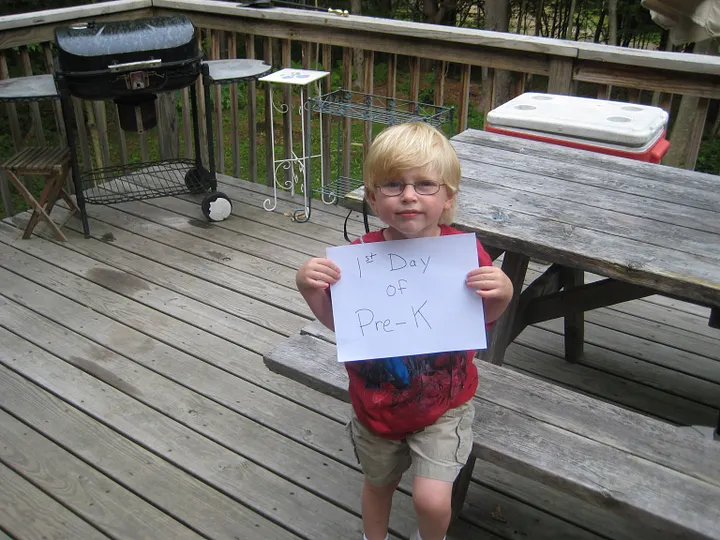
When my son was just four, my mother accidentally changed the display settings on her computer. She asked him for help, and without hesitation, he fixed it. When we asked how he knew what to do, his answer was simple: “I don’t know.”
He had simply figured it out.
That moment stayed with me because it wasn’t really about being a “digital native.” It was about adaptability. He wasn’t afraid of the technology because he didn’t know the answer. He explored until he found one.
Organizations need that same capacity for adaptation. We can’t predict every technological change, but we can prepare ourselves to respond to change before it becomes an emergency.
Learning From Y2K
One of my earliest professional experiences with large-scale technology change came during the Y2K era.
As an office manager for a dental practice, I helped lead a software transition as we prepared for the year 2000. We ran two systems simultaneously because we didn’t know exactly what would happen when the calendar changed.
Then came the irony: our new software lost data, while our old DOS-based system survived. The date rolled back to “0000,” but the data remained intact.
After months of stress, testing, and expensive software trials, we discovered that the existing system could have been modified.
That experience taught me an important distinction that I still think applies to digital transformation today: being proactive doesn’t mean reacting prematurely.
Preparation should help us make better decisions. It gives us time to understand the problem, evaluate our options, test assumptions, and determine whether an existing system can evolve or whether something genuinely needs to be replaced.
The goal isn’t change for the sake of change. The goal is to avoid waiting until circumstances leave us with no choice but to react.
When Organizations Had No Choice but to React
Fast forward two decades, and the COVID-19 pandemic gave us an extraordinary example of what happens when change accelerates faster than organizations expect.
Companies, nonprofits, schools, healthcare organizations, and other institutions suddenly had to support remote employees, communicate digitally, move services online, and rethink processes that had long depended on physical spaces.
Some organizations were prepared. Many weren’t.
A 2020 McKinsey Global Survey found that companies accelerated the digitization of customer interactions, supply chains, and internal operations by several years within a matter of months. McKinsey’s research on COVID-19 and digital transformation captured just how quickly organizations adapted when they no longer had the option of waiting.
That distinction is important.
The pandemic didn’t create digital evolution. It accelerated changes that were already underway and forced many organizations to address them all at once.
The organizations that had already invested in digital infrastructure, flexible processes, and adaptable teams entered that period from a very different starting point than those forced to build while responding to a crisis.
To me, that’s one of the strongest arguments for approaching digital transformation proactively. We don’t prepare because we know exactly what will happen next. We prepare because we know something eventually will.
Technology Has Always Been a Bridge for Me
I’ve experienced the benefits of digital transformation personally as well as professionally.
Without digital tools, I wouldn’t have been able to earn my degrees, manage my career, and raise my family in the way I have. Online learning gave me access to opportunities that would have been much harder to manage around work schedules and parenting responsibilities.
I even planned my 2003 wedding almost entirely online. I found and coordinated the priest, photographer, reception, flowers, and honeymoon through the internet, much of it over dial-up.
At the time, that felt remarkably modern.
That’s what has always interested me about technology. Not technology for its own sake, but what it makes possible: access, flexibility, communication, efficiency, connection, and new ways of solving familiar problems.
Technology evolves because people’s needs and behaviors evolve, too. The two continually influence one another.
Shifting From Reactive to Proactive
So how do organizations prepare for change they can’t completely predict?
It starts with understanding that digital transformation is an ongoing organizational capability, not a project with a final completion date.
Clear goals are essential. Before choosing a platform, migrating a system, or redesigning a process, an organization needs to understand what it is trying to improve, whom the change will affect, and what success should look like.
But the real key is often not only how, but who.
One idea that resonated with me in Dan Sullivan and Benjamin Hardy’s Who Not How is the importance of finding the right people rather than assuming we personally need to know how to do everything.
That’s particularly relevant in digital transformation. Leaders don’t need to be experts in every technology. They need to recognize what expertise is required, bring the right people into the conversation, listen to them, and create an environment where they can contribute.
For me, proactive transformation means continually paying attention to several connected areas:
- Strategy: Where are we going, what might change around us, and what are we trying to accomplish?
- People: Do we have the expertise, training, support, and capacity needed to adapt?
- Process: Are we holding onto workflows because they still work or simply because they’re familiar?
- Technology: Are our systems supporting where we’re going, and can they adapt as our needs change?
- Structure: Who owns decisions, governance, implementation, and ongoing improvement?
Organizations that ask these questions before something breaks are in a very different position from organizations forced to answer them during a crisis.
Being proactive creates time to map infrastructure, understand dependencies, test solutions, train staff, gather feedback, and make adjustments. Being reactive often means trying to accomplish those same things under pressure.
Preparation creates choices. Reaction narrows them.
Evolution Will Happen With or Without Us
Digital transformation isn’t simply about replacing people with technology or replacing old technology with something new. It’s about continually adapting to changes in how people communicate, work, learn, access information, receive services, and interact with organizations.
And that evolution will continue whether an organization is ready for it or not.
We’ve already watched technologies disappear, customer expectations change, workplaces become increasingly digital, and services move online. Choosing not to respond doesn’t stop those changes from happening. It simply increases the possibility that an organization will eventually have to catch up under pressure.
That doesn’t mean chasing every trend or adopting every new technology simply because it exists. My experience with Y2K taught me the opposite. Thoughtful transformation requires understanding the problem, evaluating the options, and making deliberate decisions about what should change and what shouldn’t.
But there is an important difference between being selective and being reactive.
Organizations that continually evaluate their digital infrastructure, understand how their audiences are changing, invest in their people, and prepare for emerging needs have the opportunity to evolve intentionally. Organizations that wait until their systems, processes, or experiences can no longer meet expectations may eventually have change imposed upon them.
COVID-19 demonstrated that distinction on an extraordinary scale. The evolution was already happening. The difference was how prepared organizations were when the pace suddenly accelerated.
That’s why I don’t think digital transformation is ultimately about technology.
It’s about readiness.
The technology will change. Platforms will change. Expectations will change. We can’t know exactly what comes next.
But we can build organizations that are prepared to evolve when it does.
And like my son fixing a computer at age four, we don’t necessarily need to know every answer before we begin. We need the curiosity, expertise, and willingness to keep figuring out what comes next.
Evolution will happen with or without us. The advantage belongs to those who prepare for change before change makes the decision for them.